Wednesday, December 2, 2009

MW 3321 Book/Author


For my last author profile entry I thought it would be fitting to post a book about Christmas. The book is called:

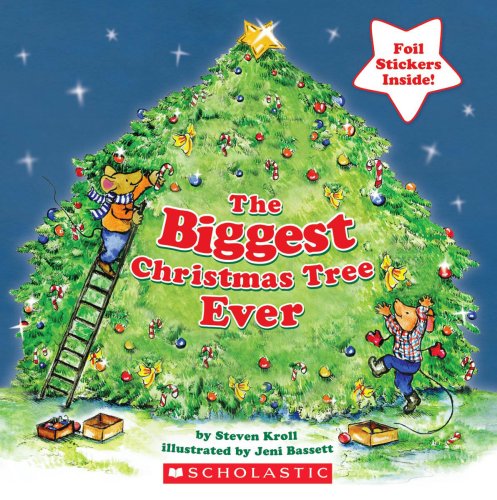
The Biggest Christmas Tree Ever
Author: Steven Kroll


Illustrator: Jeni Bassett

Ages 4-8
Paperback7.9(L) x 7.9(W) x 0.1(H) inches
It's the day after Thanksgiving, and Clayton and Desmond feel the chill in the air. The cool weather makes them think of Christmas . . . and Christmas makes them think of Christmas trees! Who'll find the biggest one? In the newest installment of this beloved, bestselling series, Clayton the town mouse and Desmond the country mouse team up to bring the spirit of Christmas to Mouseville-in a BIG way.

I also found this website that give some ideas for activities for this very special season

MW 3321 Presentations (12/2/09)

I really loved the first presentation today. It kept my attention and sometimes that is a hard thing to do. I thought it was a great idea to incorporate two books into the lesson. The first one, The Very Busy Spider by Eric Carle which was a great introduction then the next book called The Spinning Spiders by Melvin Berger I think, gave us alot of facts. I learned alot and definitely will "Borrow" this presentation for my classroom.
The next book was interesting. I am not going to be teaching high school, but the beginning of the presentation makes me want to go out and get those books to read for myself. They did not get to finish the presentation but I am looking forward to seeing it on Monday.

Monday, November 30, 2009

M & W 3321 Presentation(11/30/09)

Today my group presented on the Empty Pot by Demi. I am very happy with the outcome and I think our preplanned get together's helped us achieve a smooth transition from one person to the next which led to a successful lesson plan. I loved working with Elizabeth, Monica and Steve and would definitely do it again.
The second presentation was on the book, Pink and Say. It was a very good book and it gave us some insight to that era. It is a very touching story and the movie maker was a great idea so we could see pictures while we were being read to. I also liked how they separated the room to do two separate activities.

Monday, November 23, 2009

M & W 3321 Presentation (11/23/09)

I had alot of fun with today's presentations.
The first presentation was based off the book, "Why the Sun and the Moon Live in the Sky" by Elphihstone Dayrell. There were lots of great ideas that I learned, for instance using the milk cartons for masks. The house made out of cardboard, and getting the classroom involved was great. They were very creative in their presentations. Job well done!!
The second presentation was about the "10 thinks I can do to help my world" I do recycle and know alot of information about this subject. I like how they came up with that PowerPoint presentation. The music was perfect for the subject. I think it can get some of the kids in the classroom to gear up and recycle. I also like the posters. It gives the students to use hands on activities to engage in and help keep them focused.

MW 3321 Author/Book

I have been wanting to read this book and found out it is coming to the movies in Feb. 2010
Now I know what I will be doing over the Christmas break!
The Lightning Thief (Percy Jackson and the Olympians Series #1) by Rick Riordan
(Paperback)
Age Range: 9 to 12
Pub. Date: April 2006
392pp

Here are some ideas for lesson plan

http://www2.scholastic.com/browse/collateral.jsp?id=10864&FullBreadCrumb=%3Ca+href%3D%22http%3A%2F%2Fwww2.scholastic.com%2Fbrowse%2Fsearch%2F%3FisParent%3DY%26query%3Dthe%2Blightening%2Bthief%26Ntt%3Dthe%2Blightening%2Bthief%26Ntk%3DSCHL30_SI%26Ntx%3Dmode%2Bmatchallpartial%26y%3D4%26N%3D0%26x%3D49%26_N%3Dfff%22+class%3D%22endecaAll%22%3EAll+Results%3C%2Fa%3E

Wednesday, November 18, 2009

MW 3321 Author/Book

Charlie and Lola: I Am Too Absolutely Small for School
Lauren Child
Ages 4+
32 pages
Paperback
Lola is not so sure about school. After all, why would she need to count higher than ten when she never eats more than ten cookies at a time? And why write letters when you have a telephone? Once again, it's up to ever-patient big brother Charlie to persuade Lola that school is worthwhile - and that her invisible friend, Soren Lorensen, will be welcome, too.
Charlie and Lola is a series of picture books made by Lauren Child and now is a children's TV show. Each half-hour format show contains two segments with different plots, each starting off with Charlie saying, "I have this little sister, Lola. She is small and very funny."
I also found this website http://www.charlieandlola.com/ it has information on the seris and games that kids can play online.

Genre Presentation Research

We are having a lot of fun working on our Genre Project. I have found several websites that have help guide our group to hopefully a successful Lesson Plan. One of the sites that I found very helpful is the Educators Publishing Service on Guided Reading Strategies from Hand prints. www.epsbooks.com
It is a two page walk through on how to guide your students before the reading, during the reading as well as the after the reading.
We also were able to order supplies for our project using www.amazon.com and Oriental Trading company at www.orientaltradin.com which had loads and loads of stuff. It was really hard to narrow down items we wanted to use. I did register at the http://rubistar.4teachers.org and played with a rubrics.
The lesson plan we found at www.bu.edu
we did modify the lesson plan but it was very helpful.

Monday, November 16, 2009

M & W 3321 Author/Book


I thought I would add some Thanksgiving books for the season!!!
by Joseph Bruchac
(Grades K-3)
I the Scholastics website I found a lesson plan and worksheet that goes with the book.
Travel back to 1620 as an English ship called the Mayflower lands on the shores inhabited by the Pokanoket people. As Squanto welcomes the newcomers and teaches them how to survive in the rugged land they called Plymouth, young readers are treated to a story ending with the two peoples feasting together in the spirit of peace and brotherhood.

Milly and the Macy's Parade

Imaginative story based on a true story helps kids learn about American culture.

by Shana Corey
illustrated by Brett Helquist
Scholastic Inc./Scholastic Press
$16.95 US/$26.99 CAN
0439297540
October, 2002
40 pages/hardcover
ages 3 and up


The above website have some ideas on lesson plans for the classroom that are going to be very helpful!!

M & W 3321 Author/Books

Marcia Thornton Jones

Debbie Dadey


Keyholders SERIES

Released MAY '09:
#1 - This Side of Magic
Starscape,
April 2009
Grade Range: 2 to 5,
Age Range: 7 to 10

#2 - The Other Side of Magic
Coming NOVEMBER '09:
#3 - Inside The Magic
#4 - The Wrong Side of Magic


Three kids, a dragon, a unicorn, and rat discover that they are the Keyholders to a magical realm! A Keyholder's job is to guard the border between the real world and the magical world. But, Penny & Luke aren't sure they even want to be apprentice Keyholders. But when they meet their "links" -- magical helpers from the other side of the border -- they change their minds. And just in time! The evil Queen of the Boggarts is determined to invade Penny & Luke's world...and only the Keyholders and their links can stop her!

Tuesday, November 10, 2009

3321 MW Books/Author

This last weekend I went yard sale shopping, well OK OK I happen to be driving by a house that was having a yard sale and saw some books, slammed on my brakes and hit the jack pot!!
I found:
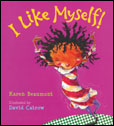
I Am Special!
based on I Like Myself!
by Karen Beaumond http://karenbeaumont.com/
and Illustrated by Davie Catrow http://www.catrow.com/ (this website is a must see!)
Grades: K–3
View and print the student activity sheet (PDF)

This is a delightfully illustrated rhyming book in which the main character knows she is different and special and that’s what makes her so wonderful! The pictures and words will make each reader smile and feel good about being an individual. The students will surely want to read this story again and again! The next book on my list is "I Like Myself!"


How I Became Champion of the Universe

Author:Kenny Harrison
http://plaidpup.com
Hardcover:
Illustrated: 32 pages.
Publisher:
Tricycle Pr (08/01/2002)
ISBN:
1582460779
ISBN13:
9781582460772
Reading Level:
Age: 3 - 5
For the young hero of this story, seeing Mighty Max live in the ring is the ultimate in entertainment. So when Atom Smasher from Planet Z challenges Max to compete for the title of the universe, Dad scores front row tickets. But Atom Smasher cheats, so it's up to the world's biggest little wrestling fan to use his secret weapon to teach a lesson in fair play... and clinch the championship! Readers will be tickled to learn what the secret is.


Franklin and the Tooth Fairy

Author: Paulette Bourgeois
Illustrator: Brenda Clark
age:4-7
Franklin's friends are losing their teeth — but not Franklin, who's toothless. (Turtles don't have teeth!).
In this endearing tale featuring the popular turtle-hero, Franklin learns it's okay to be different.

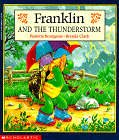
Franklin and the Thunderstorm
by Paulette Bourgeois
Illustrator Brenda Clark
age range 5-8
32 pages
As a thunderstorm approaches, Franklin's friends help him cope with his fear of stormy weather.


Thanks to hitting my own personal jackpot, ........if you see me at a yard sale,.......you know what I am looking for........ :)

3321 MW Chapter 11

I found this book on the internet called, Shared or Guided Reading books
Yellow Brick Roads: Shared and Guided Paths to Independent Reading 4-12

by Janet Allen, Philippa (Ed.) Stratton, Philippa Stratton (Editor)

$24.00 List price
ISBN-13: 9781571103192
Edition Description: New Edition
Edition Number: 1
Pub. Date: January 2000
Publisher: Stenhouse Publishers
********************************************************************************
I also found a website that is called, Kindergarten and Preschool Shared Reading, Guided Reading, Phonemic or Phonological Awareness and Predictable Charts
The site shows examples of SHARED READING,
ECHO READING
where, the teacher reads a word or sentence. The children echo what she just read. She continues to touch each word as they read.
CHORAL READING
The children read at the same time as the teacher.
FILL IN THE WORD
The teacher leaves out a word or phrase. The children fill in the missing word or phrase. This is a very good strategy to use when teaching the concept of rhyming.
TEACHING THE ALPHABET - ALPHABET READERS
I am definitely going to add this site to my favorites to refer to.

Thursday, October 29, 2009

MW 3321 Chapter 9 Non-Fiction

What is Non Fiction?
Nonfiction Literature encompasses informational books and also biographies. They spark wonder as well as joy in learning. They can answer specific questions, for finding information.
I am more of a fiction reader,
but I sometimes pick up books that are nonfiction. When I do occasionally find a nonfiction book I like, I am excited about reading it but I rarely read it cover to cover. After Mrs. Pickett stated in class that you are not suppose to read some of these books cover to cover, it makes a lot of sense. I would pick out the parts of the book that would interest me and read it and leave the rest for another day.
I do think it is important to include nonfiction in the classroom. These types of books can be fun to read and also get to gain a little bit of knowledge about people and places in the process.

MW 3321 Author/Book

This week I thought I would look at what book was the winner for the 2009 Caldecott Medal.
The Caldecott Medal was named in honor of nineteenth-century English illustrator Randolph Caldecott. It is awarded annually by the Association for Library Service to Children, a division of the American Library Association, to the artist of the most distinguished American picture book for children.
2009 Medal Winner
The 2009 Caldecott Medal winner is
The House in the Night
illustrated by Beth Krommes
written by Susan Marie Swanson
(Houghton Mifflin Company)
Richly detailed black-and-white scratch board illustrations expand this timeless bedtime verse, offering reassurance to young children that there is always light in the darkness. Krommes' elegant line, illuminated with touches of golden watercolor, evoke the warmth and comfort of home and family, as well as the joys of exploring the wider world.

Tuesday, October 20, 2009

M & W 3321 Chapter 8 with books I like

Chapter 8
The Fiction Family
All fiction is imaginative. It can be a novel, short story, drama or a narrative poem. There are several types of fictions used with children books. These types of books can be contemporary, realistic fiction, historical fiction, fantasy, science fiction.
The elements of fiction are how we personally feel about the books that we read. The elements include characterization, plot, theme, setting, style, and point of view. There are some guidelines for choosing literature in our book page 189.
Categorizing Fiction
Contemporary Realistic Fiction is the most popular with children because they are concerned about interacting appropriately with friends and family. Middle school children enjoy reading about others their own age. They enjoy reading about characters like themselves who encounter humorous situations and predicaments. They also enjoy reading about mysteries, I will have to say that I am a part of that category. I agree with the book that it is fun to read these books because of the suspense and opportunity to become a part of solving the puzzle. I always catch myself trying to predict what is going to happen before I find out. Other types of stories are sports, romance, school stories and coming of age books.
Historical fiction books are organized by historical era. The earliest times are usually set in Europe or Asia. I did not realize this bit of information. Early American is about life of the European settlers and the native people between the 16th to the 18th centuries. Westward Expansion is before and after the Civil War, the Civil War Era and the Industrialization and Immigration are about the time of the 19th century. The 20th century includes the War and the Great Depression, Civil Rights and Social Unrest.
Fantasy fiction books in this section are toys and animals, Time Travel, the supernatural, folklore, and crazy characters and unusual worlds. My favorite in this section is Mary Poppins, “Supercalifragilisticexpialidocious.” Science Fiction books are in a series of books; my favorite is “Twilight” by Stephanie Meyer at the moment but I am in the process of reading “The Legend of the Seeker” by Terry Goodkind. I think now that I have read this section; I definitely enjoy reading books that fit into this category
Censorship is brought about because we believe we need to protect our children. I think this is valid. Books that are censored can be good thing or a bad thing. Bottom line, I think it depends on each individual person to research/read a book before they lay down their own judgment and do not rely on other people or media to make up your mind.
As a teacher I do agree that it is important when making decisions of selecting fiction books for the use in our classrooms. On Page 202 there are some questions you can ask yourself when selecting these books.

Sunday, October 18, 2009

MW 3321 Author/Book

Duck, Duck, Goose
Tad Hills
Library Binding,
40 pages
Random House Children's Books
ISBN13: 9780375840685
Edition: Illustrated
Age: 3 - 7 years
Grade: Preschool - 2
Description: Duck & Goose, Goose & Duck. Feathered friends forever . . . or are they? That's what we discover in this charming and hilarious follow-up to the bestselling "Duck & Goose." You see, there's a challenge to their friendship: a little whippersnapper of a duck named Thistle. Thistle's good at "everything "(or so she thinks), from math to holding her breath to standing on her head. Duck thinks she's fantastic. But Goose does "not"! And so Goose is faced with a problem close to the hearts of children everywhere: what happens when your best friend makes a "new "friend?

Meet Wild Boars
Meg Rosoff
Paperback, 40 pages
ISBN13: 9780312379636
Edition: Illustrated
Age: 3 - 8 years
Grade: Preschool - 3
Description: Meet Wild Boars! Or maybe you better not. After all, they are dirty and smelly, bad-tempered and rude. They might try to fool you, but don't worry, you won't believe them. There's no such thing as a nice wild boar. Hmmm. This insufferable gang of boars will mess up your house and set a very bad example indeed. If you are foolish enough to fall in love with them, they will break your heart (and most of your furniture). So don't say we didn't warn you!

Tuesday, October 13, 2009

3321 M&W Chapter Seven

Chapter 7
Picture Books
Picture books are a combination of literature and fine arts. With a few exceptions picture books have 32 pages and even though they are rarely numbered they generally are the same length. (I thought that was an interesting factoid)
The process of producing a picture book begins with the text. After the text is approved then it is sent to the artist to interpret the text. The author does not know what the artist has done until the book is complete. I think if I were the author I might have a hard time letting someone else tamper with my book without my approval, even if it a picture book.
Picture books are not categorized into any genre. But many are classified as fiction. Picture books started when early humans would leave their picture stories on the cave wall. Randolph is considered the father of the picture books. He was a British born Caldecott, which is where we got the prestigious Caldecott Medal from. He is known for two of his two early picture books called, Sing a Song for Sixpence and Hey Diddle Diddle.
Picture books are literary texts and illustrations that are designed to be effective and attractive. Because it takes awhile to produce a book they are usually more expensive than many other kinds of books. The basic terms that are used to describe the visual or pictorial elements in picture books are line, color, shape, texture, and design or composition.
Because picture books are only 32 pages, pictures books must be composed carefully to say a lot in a limited amount of space. The books need to contain characters, plot, setting, well-written prose (good writing with appealing words and sentences), figurative language (using similes and metaphors), good opening lines, communication between characters, using understatement (knowing when to not say too much), voice (a writers signature style).
There are many forms of picture books: alphabet books, concept books, pope-up books, interactive books, wordless picture books, and predictable patterned language books.
I like how in each chapter this book gives us guidelines for choosing literature. It has so much information; I have decided I need to keep this book for my collection for future use. I will have to say it again; I think it is important to do a little bit of research when choosing the books that you put in your classroom.

3321 M&W Picture Books Author Profile


The Bad-tempered Ladybird
» Eric Carle
30 Sep 1982
3 - 7 years

Synopsis
The story of how a bad-tempered ladybird turns into a nicer, happier bug. Pages clearly illustrate the differences in small and large and time is shown visually as the sun moves through its path

Marley's Treasure
By Gable Yerrid

Illustrator Jennifer Fitzgerald


Marley's Treasure explores the idea that true treasures of life are not things but relationships. Marley finds a bunch of "the most beautiful golden bananas," Marley is a little monkey, so these bananas are truly the ultimate in treasure for him. His need to guard the treasure causes him to distance himself from his friends leading him to a very sorry pass. The requisite wise old friend, in this case Pete the pelican, helps Marley see his golden bananas in a new light. As he gives his bananas away, Marley rediscovers the true treasures of life are friendship and happiness.
The sweet softly hued illustrations, especially of friendly little Marley, elevate this picture book above similar books devoted to this theme. Children will enjoy this morality tale set in a tropical paradise.

Wednesday, October 7, 2009

3321 M&W Chapter Six

Traditional stories mirror the values and morals from which they arise. I think it is very important to learn about other cultures. With the invention of the Internet, effect is, we now have globalization. We are becoming more aware of other societies, cultures and values. Through traditional stories we can learn our differences and similarities, and we can also learn to respect other peoples view.
I like the idea of integrating your classrooms library with a variety of cultures. As a class, we can learn a lot about the people and then we can learn about ourselves also.
What has changed in my current ways of thinking? I know I need to put a variety of Genre books in my classroom. But now I also want to take it a step further and make sure I am finding books that can be educational about other peoples cultures and beliefs. In return the student may reflect and decide if they agree with the book or disagree. Which either way, in general, there is no wrong answer.

Wednesday, September 30, 2009

3321 M&W Chapter Five

Chapter five
Poetry
What is Poetry?”
According to the book, “Poetry is a musical language.” It has many possible definitions; it is composed in a way that words are chosen carefully and concisely. Poetry use rhyme, rhythm, figurative language, and shape to create poetry that is imaginative, evocative, and unique.
What I like about this chapter, it reminded me of high school and I loved writing poems. I had almost forgotten that I use to write poetry and there is a spiral of poems somewhere in my house. I agree with the book that you should not drill students on the defining forms or have them write poetry in a certain way. I remember doing that, I had no fun. I think you can make any activity fun, if you put some thought into it, and poetry IS FUN
It is also very important that you as a teacher have a wide variety of poetry books that are age appropriate. You don’t want students to get overwhelmed and decide early in the game that poetry is not for them. You will have lost them before you really even get started.
On pg. 111, there is a result of survey that tells us what kind of poetry children prefer. Some of the items I thought are helpful:
*Children prefer narrative and limerick poetic forms
*Humorous and focused on familiar experiences
*Animals are popular
*Rhyme, rhythm, and sounds are enjoyed
*Visual imagery
*About imaginative events and people
*And surprising to me, contemporary poems

Tuesday, September 29, 2009

MW 3321 Poems/Author/Book

Animal Poems of the Iguazú
Written by Francisco X. Alarcón
http://www.colorincolorado.org/read/meet/alarcon
Illustrated by Maya Christina Gonzalez
let’s listen to / the green voice / of the rainforest
Bilingual in English and Spanish
32 pages
Ages 6 and up
9” x 11”
Hardcover
ISBN: 978-0-89239-225-4
http://suzyred.com/2008comets.html
I happen to come across this web site. It has other links that are related to the book. I had fun playing with it. It has interactive games , slide shows with music and many other things that might give ideas to encourage students to learn more about science.

Comets, Stars, the Moon, and Mars: Space Poems and Paintings (Hardcover)
By Florian, Douglas
http://www.douglasflorian.com/
ISBN-13: 9780152053727
Published: Harcourt Children's Books, 04/01/2007
Pages: 48
Language: English
Recommended Reading Level
Minimum Age: 5
Maximum Age: 10
Minimum Grade Level: Kindergarten
Maximum Grade Level: 5th Grade

Wednesday, September 23, 2009

3321 M&W Book/Author

Quinito, Day and Night
Written by Ina Cumpiano
Illustrated by José Ramírez

Every morning, my little sister Clara wakes up early. My big brother Juan wakes up late. I don’t wake up early or late. I wake up at just the right time. I’m Quinito. Good morning!

Bilingual in English and Spanish
32 pages •
Ages 4 to 8
8 ½” x 10”
Hardcover
ISBN: 978-0-89239-226-1

3321 M & W Chapter Four

“Responding to Literature”
Children responding to literature show us ways the children connect to books. When children make a unique personal connection with a story they are reading, they get engrossed in the world of that story and mentally go on those adventures. A teacher’s goal is to keep a positive reading experience and to create a lifetime love of books for their students.
Response: The Reader
Our life experiences and our interest influence how we respond to a book. Knowledge obtained from school, family, travels and other experiences create a foundation that influences how we respond to everything in our world, including literature. Students who are proficient readers enjoy reading and have advance literacy skills.
I like the ideas that Tomlinson and Lynch-Brown on page 61 suggested. It’s a strategy to help create a classroom library based on student’s interest by using a questionnaire. I have started my own library collection. It is only a few books, but I want to be able to get a wide variety of books for my students and I think questioning students in what they are interested in should help me build that library.
Response: The Text
There are different responses for different types of text. When reading a novel, we usually become absorbed in such things as relationships among the characters and when reading non fiction, we tend to approach the experience as a task to gather information from.
Response: The Context
Reading is a solitary activity. Response to reading is often shaped by social contact. I didn’t realize this bit of information. After reading this section, I realize when I read a really good book, (which happens often) I always get in touch with my friends, sisters, Mom, Grandmother and we all discuss what book we are reading, what we think of the characters and so on. We take turns sharing books. Well except my grandmother who lives out of town, I go on Amazon.com and buy her books and they ship them straight to her house. She only buys used books and sometimes I can’t wait for her to find and read certain books.
Great example of reading is shaped by social contact, my whole family has read and reread the “Twilight” series by Stephanie Meyer and we all own our own books on this one, we don’t share on this one :} Our family gathering is all about the food and that book!!!
We just can’t get enough of it.
Cultural Influences and Response
Students respond to literature based on their unique background and a large part of this background is culture. The example that Mrs. Pickett told us in class about the Dick and Jane story being read in an Alaskans culture was a great one. As a teacher you need to put thought and research into the books you pick out for your class or it can be devastating experience for the students.
A Literacy Transaction
There was a New Critical Formalism Movement that came about in the 1930s. It focus was on what the author intended message and not the perspective of the reader. Louise Rosenblatt transformed our perception of how literature could be taught, by considering the perspective of the reader. Rosenblatt (1978) calls “stance” when approaching the reading of text which we learned last chapter about efferent and aesthetic reading. Readers, who respond from an efferent stance, focus on information or analysis. When children respond to a book aesthetically, they focus on parts of the story that they are interested in.
Teaching from a Literaray Transaction Perspective
Rosenblatt suggest that first, teachers must recognize and support active roles of the readers. Readers try to find a meaning and/or connection to the book through a personal connection.
Activities for Deeping Children’s Responses to Literature
Children become more thoughtful readers when thy have the opportunities to think about the books and then express those thoughts in a way they find personally satisfying. Sharing their ideas and feelings with teachers and peers through movement, talk, writing, drama and art helps them grow in their ability to respond in richer, more complex ways.

Tuesday, September 22, 2009

3321 M&W Book/Author

In honor of Spanish Heritage Month and Grandparents Day
I Found this book
Can Read this in Two Languages
A Walk With Grandpa/Un paseo con abuelo
By: Sharon Solomon
Age Level: 3-6
Reading Level: Beginning Reader
ISBN: 9781934960127
As Daniela walks in the woods with her grandfather, they play a game in which they express how much they love each other. Children may wish to continue the game on their own with their family members after finishing the story! Colorful illustrations bring Daniela and her grandpa — as well as the surrounding forest, wildlife, and nearby wetlands — to life. Bilingual text.

Scholastic Website


I was looking on the Internet to find some books that celebrated Hispanic Heritage Month and came across this website.
I especially love the area for teachers resources.
It has a tab for New Teacher Survival Guide with tips on how to make the first day of class successful along with other tips.
It is a must see!

Saturday, September 19, 2009

3321 M&W Authors


I grew up reading Little House Books by Laura Ingalls Wilder and loved them. My sisters and I use to pretend, I would be Mary and my two younger sisters would be Laura and Carrie. We would read these books and we felt as if we could relate with them and as we read the stories to each other, we would go on adventures with them.
I grew up watching the show and watching Melissa Gilbert. This website is a more updated version but it still has the same concepts. I also like that it has games to play and also great activities for teachers and librarians.
http://www.littlehousebooks.com/


This book was published in 1994, but I originally knew it from one of the songs that she sings. I do not listen to country music now but I was brought up listening to country music. I found this book about ten or fifteen years ago. This book is another one of those books that reminded me that even though we did not have money growing up, we could feel rich in our own way. This book is one of my favorites that I share with my nieces and nephews.

3321 M&W Chapter Three

“What is Comprehension?”
According to the textbook, “it is the process of understanding, or making meaning from what we read…” The role of the teacher is to match student’s interests with their reading ability. Teachers need to find out a way to make reading a positive experience for the students. The readings should be challenging but achievable, where the student will comprehend the information while increasing their vocabulary and work knowledge.
Louise Rosenblatt, an educator from the 1930s, classified reading into two purposes.
1) Aesthetically = when people read for fun and the process can be quick.
2) Efferent = reading a difficult textbook or doing ones taxes, a process which can be long and more likely to be slowed and have to reread passages.
There have been attempts in reading education to assign a readability, or difficult level. Finding the right book for a student is a combination of teacher judgment, purpose for reading, student interest and trial and error until you find a suitable text that will not frustrate the student. There are several steps in building reader comprehension:
1) Activate or supplying prior knowledge
2) Guiding student reading
a. I like the idea of teacher guide reading with students by taking them on a “picture walk.” The teacher will first show the pictures in the book, ask the students what they think is going on in each picture. This method can help activate student’s knowledge, help them predict what they will read, build anticipation for the reading event.
3) Reinforcing concepts
4) Encouraging critical thinking
Teachers can assess how well a student comprehends the material through retelling, shortcut Miscue Analysis, story mapping as well as many other assessments. General discussions in the class room among fellow classmate plays and important role in comprehension and in building vocabulary thru pre-reading and post reading.
I think it is very important to understand what you are reading about. I have seen on TV where toddlers are able to read site words and words that are long. I would see this andbould be impressed. After I have read this chapter, not so impressed anymore. It is great that they can read, but do they understand what they are saying? My guess is no.

Monday, September 14, 2009

MW 3321 Author/Book


Another author I found, I could not fit it on my last blog but wanted to include it. She promotes a variety of "self-helps" for children. Her website also has teacher resources and ideas for classroom activities.
Jamie Lee Curtis
Is There Really a Human Race?
All Ages
All Grades

Is there really a human race?Is it going on now all over the place?When did it start?Who said, "Ready, Set, Go"?Did it start on my birthday?I really must know.With these questions, our hero's imagination is off and running. Is the human race an obstacle course? Is it a spirit? Does he get his own lane? Does he get his own coach?Written with Jamie Lee Curtis's humor and heart and illustrated with Laura Cornell's worldly wit, Is There Really a Human Race? is all about relishing the journey and making good choices along the way—because how we live and how we love is how we learn to make the world a better place, one small step at a time.

MW 3321 Chapter 2/Author/Book

Culture is discussed in Chapter two. The book defines culture as a "way of knowing, believing, valuing and thinking among a group of people" (pg 23). Understanding your students culture is very important knowledge. Students who are in schools that have the same culture at home and at school have a higher chance of graduating then a students who's culture is different from home and school. It is up to the school and educators to smooth the transition by learning each of their students background. It also helps if a teacher can learn the cultural of a student to help prepare themselves in the classroom.
This was an eye opener for me. I did not realize until reading this chapter that culture plays a big part in a students academics. I hope that I can address these issues when I become a teacher and help all students to have a easy transition from home to school as well as learning more about a certain persons culture.

Robert Quackenbush
http://www.rquackenbush.com/books.htm

Flamenco to Mischief: A Miss Mallard Mystery(Paperback, 2000)
Format: Paperback
ISBN-10: 0961251824ISBN-13: 9780961251826
Nov 2000
Publisher: Robert Quackenbush Studios
Grade: From 3 to 4
Language: English
In this first Chapter Book written especially for the Miss Mallard Mysteries, the world-famous ducktective triumphs in Seville. She goes undercover as a flamenco dancer to find out who stole a painting by her artist friend, El Ducko, and becomes ensnared in a terrorist plot by an evil gang called the Scorpions.

Wednesday, September 2, 2009

3321 M&W

All this blogging stuff is very new to me. But I am very happy to learn. I look at everything that I do in a classroom can be an idea of how I might conduct my class in the future. I am not very good with discussing my opinions on the internet. But I am going to “challenge” myself to get out of that box.
I am especially having fun looking up websites to help me start to build my classroom library. Even though I do not have any kids, I already have several books that are my favorite that I share with my Nieces and Nephews. They have actually asked me if they can borrow a book in the past.
One website that I found to be very useful is,
http://www.kidsreads.com/authors/authors.asp
You can look up the authors by their last name and then they provide a brief history on them. On the left side of the screen, they provide a list of book(s) that particular author has written. You then can click on one of the books and it will redirect you to a link that will provide you with information such as: the ISBN number, age group for the book and the number of pages in that book.
I especially like how you can look up books and find the age group that they are good for as well as the ISBN numbers so you can look online for competitive pricing, to help build my future classroom library. You can also look up books that are on movies, get reviews and books that are coming out soon.
I like this site so much; I have already added it to my favorites.

Wednesday, August 26, 2009

3321 M&W

Hello, this is the first time EVER that I have Blogged, Yeah for me
Bobbie Padilla